
How to verify heat number traceability for steel pipe fittings
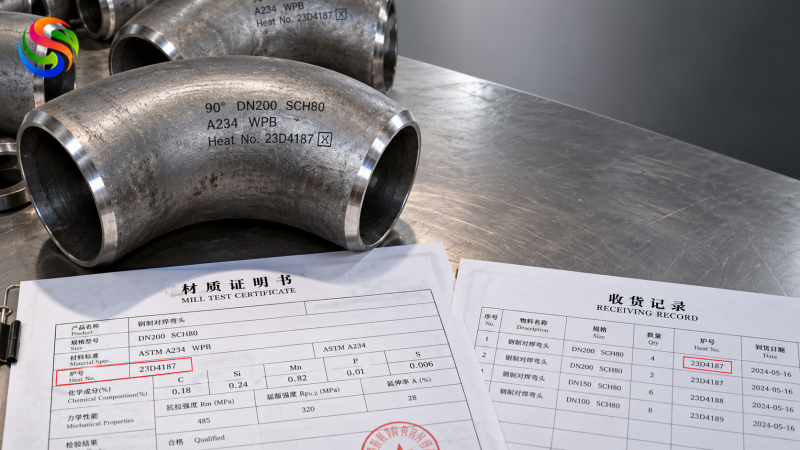
A delivery of steel pipe fittings may arrive with readable markings but certificates covering several heats. Before releasing the fittings for installation, verify an unbroken link between each fitting’s identification, the applicable material certificate, and receiving records. A matching grade alone does not establish heat number traceability; a mix-up can put unsuitable material into pressure service.
The core test is straightforward: does the physical identification lead to the correct steel heat, and do the records demonstrate compliance with the ordered fitting specification? Keep material on hold whenever that link is missing or contradictory.
Establish what the order requires
Start with the purchase order, project specification, and applicable product standard. Requirements vary between wrought butt-welding fittings, forged fittings, material grades, and project traceability levels. Standards such as ASTM A234 or ASTM A182, together with applicable general requirements, govern different product categories; do not apply one marking rule to every fitting.
Confirm the required certificate type. EN 10204 Type 3.1 identifies an inspection document arrangement, not independent third-party certification. Type 3.2 involves additional validation as defined by that standard. Neither designation, by itself, proves that a certificate belongs to the item received.
Follow the identification from metal to certificate
- Read the physical identification. Record the heat number or permitted traceability code, manufacturer identification, grade, size, and other required markings. Photograph faint characters before cleaning; avoid grinding or unauthorized restamping.
- Resolve coded references. A production or lot number may legitimately differ from the steel heat number. Obtain the manufacturer’s controlled cross-reference showing how that code maps to the heat. A packing-list assertion alone is insufficient where item-level traceability is required.
- Match the certificate. Compare the heat reference, manufacturer, material specification and edition where specified, grade, product description, and certificate number. Check that quantities and delivery references reconcile with the shipment, allowing for documented split deliveries.
- Verify the technical results. Review chemical composition against the specified grade. Check mechanical properties, heat-treatment condition, and supplementary tests where required. Distinguish heat-based results from tests tied to a manufacturing or heat-treatment lot.
A raw-material mill certificate may support steel identity, but it does not automatically demonstrate finished-fitting compliance. Where forming or heat treatment affects required properties, obtain the fitting manufacturer’s certification and relevant processing or test records. Different heat-treatment lots can originate from the same steel heat.
Check continuity through handling and fabrication
Compare receiving logs, storage locations, picking records, and fabrication records. Mixed bins, split packages, coating, and removal of marked areas are common points where identification can be lost. Packaging identification is acceptable only where the governing requirements permit it and handling controls preserve the link to individual items.
Before identification is removed or obscured, use an approved marking-transfer procedure with verification and recorded authorization. For installed fittings, connect the material record to the applicable spool, weld map, or equipment location.
When the evidence does not agree
Segregate affected fittings and raise a nonconformance report. Ask the supplier or manufacturer to reconcile discrepancies through controlled records; do not accept handwritten changes without authorized correction. Positive material identification can help assess alloy composition, but it cannot recover a heat number or replace missing mechanical-test and processing records. Release material only after the required traceability is restored and documented acceptance is authorized; otherwise, reject or replace it under the project’s disposition procedure.
Please give us a message