
What causes cracking at welds in stainless steel pipe fittings?
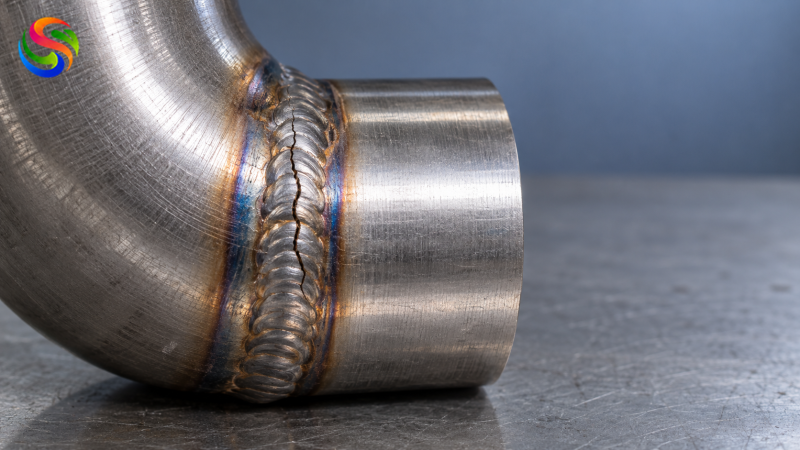
What causes cracking at welds in stainless steel pipe fittings?
Cracks at welds in stainless steel pipe fittings can turn a routine inspection into a shutdown risk. The visible crack is only the starting point: welding conditions, filler selection, joint restraint, and service exposure may all contribute. For maintenance decisions, the useful question is not simply whether the weld is defective, but when the crack formed and what continues to drive it.
Timing and location narrow the cause
Cracking detected immediately after fabrication raises suspicion of solidification cracking. As weld metal cools, unfavorable chemistry, contamination, and shrinkage under restraint can leave cracks along the weld centerline or at an unfilled crater. For many austenitic stainless welds, filler selection considers ferrite content to reduce susceptibility; this is not a universal rule for every stainless grade.
Heat input matters, but “too much heat” is not a complete diagnosis. Joint geometry, welding sequence, interpass temperature, and filler compatibility must be reviewed together. In duplex stainless fittings, thermal control also affects phase balance, so an austenitic stainless repair procedure should not be assumed suitable.
Cracks appearing after service suggest a different investigation. Chloride stress corrosion cracking requires susceptible material, tensile stress, and a suitable environment. Weld residual stress can supply the tensile component, while process fluids, cleaning chemicals, or wet insulation may supply chlorides. Branching cracks support this possibility, but appearance alone cannot confirm it.
Look beyond the weld bead
A crack beside the weld may involve the heat-affected zone. Certain thermal histories can sensitize susceptible stainless grades, increasing vulnerability to intergranular corrosion in relevant environments. Low-carbon grades reduce sensitization risk, but they do not make a fitting immune to chloride attack or fatigue.
Repeated cracking at a weld toe near a pump, unsupported branch, or misaligned connection should prompt checks for vibration and cyclic loading. Poor fit-up and forced alignment add stress before operation begins. Rewelding without correcting pipe support or movement can leave the original failure mechanism untouched.
Build the repair around evidence
A suspected pressure-boundary crack requires assessment under site procedures; isolate and depressurize before intrusive inspection. Record the location, orientation, operating history, material grade, and previous repairs before grinding away evidence. Dye penetrant testing can reveal surface-breaking cracks, but it does not establish their depth. Additional examination should suit the fitting geometry, wall thickness, and applicable requirements; metallurgical examination may be needed to establish the mechanism.
Do not simply weld over a crack. An approved repair normally requires complete defect removal, confirmation of removal, a qualified welding procedure, and specified post-repair examination. Replacement may be more appropriate where cracking is extensive, access is poor, or remaining wall condition is uncertain.
Xingyuan Fluid Systems Co., Ltd. supplies Steel Pipe Fittings alongside pipelines, valves, and pumps, drawing on 22 years of product selection and sales experience. That system-wide context matters: when reviewing a replacement, share the material certificate, service chemistry, temperature, pressure cycles, and support arrangement—not just the fitting size. Those details help distinguish a material-selection problem from a welding or operating problem.
Please give us a message