
When do marine equipment parts need duplex stainless steel?
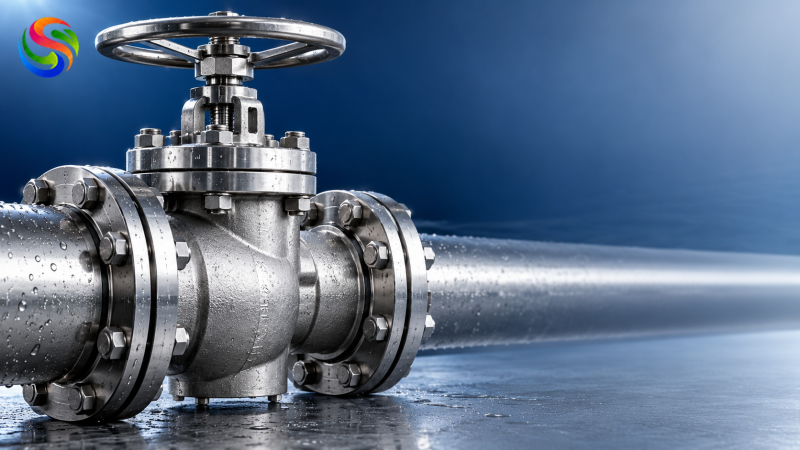
When should marine equipment parts move beyond 316L stainless steel? The answer depends less on whether a component touches seawater than on what happens during operation, shutdown, and maintenance. Chloride concentration, temperature, mechanical stress, and trapped seawater can turn an acceptable material into a recurring maintenance problem. Duplex stainless steel deserves consideration when these conditions exceed the corrosion resistance or strength available from 316L—but the grade must match the actual exposure.
Look for the conditions that challenge 316L
A drained, freshwater-rinsed deck fitting faces a different duty from a pump casing holding warm seawater through extended shutdowns. Both are marine components, yet their material requirements can differ substantially.
Duplex becomes a stronger candidate when the service assessment identifies:
- Persistent chloride exposure: continuous seawater immersion, splash-zone wetting and drying, or evaporation that concentrates salts.
- Crevice-prone geometry: gasket faces, threaded connections, deposits, and stagnant pockets where localized corrosion can develop.
- Elevated temperatures and tensile stress: conditions that increase concern about chloride stress corrosion cracking in austenitic stainless steels.
- High mechanical demand: pressure containment or shaft loading where higher yield strength offers a design advantage.
These are reasons to evaluate duplex, not automatic approval criteria. Flow velocity, oxygen availability, biofouling, cleaning chemicals, and exposure duration also affect performance.
Choosing between 2205 and super duplex
Duplex 2205 generally provides greater resistance to pitting and chloride stress corrosion cracking than 316L, alongside higher yield strength. It can suit selected valve, pump, piping, and fitting duties, provided the operating envelope and crevice conditions are assessed. It should not be treated as a universal material for untreated seawater.
For more demanding seawater systems, super duplex grades such as 2507 often merit evaluation. Their higher chromium, molybdenum, and nitrogen contents improve localized corrosion resistance. Nevertheless, warm stagnant seawater and severe crevices can remain challenging, even for super duplex.
Do not select by PREN alone. The pitting resistance equivalent number helps compare nominal alloy compositions; it does not establish a safe operating temperature or predict the performance of a welded, gasketed assembly. Relevant service experience and corrosion testing provide stronger evidence for critical duties.
For marine equipment parts, fabrication can decide the outcome
A suitable alloy can still fail if fabrication damages its microstructure or leaves contaminated surfaces. Duplex welding requires controlled heat input, interpass temperature, and appropriate filler selection to maintain a suitable phase balance and avoid harmful intermetallic phases.
Specify qualified welding procedures, material traceability, appropriate inspection, and post-fabrication cleaning. For cast pump or valve bodies, verify the relevant casting grade and heat-treatment requirements rather than assuming a wrought-grade designation is sufficient.
Higher strength may permit design changes, but thinner walls are not automatic: pressure codes, stiffness, fatigue, erosion allowance, and connection requirements still govern. Duplex is also not a remedy for cavitation or poor hydraulic design.
Make the upgrade decision against lifecycle risk
Retaining 316L can be reasonable where exposure is mild, drainage is effective, and maintenance is reliable. Duplex becomes more persuasive when corrosion-related downtime, replacement access, or pressure and load requirements outweigh the additional procurement and fabrication costs.
For component selection discussions with Xingyuan Fluid Systems Co., Ltd., provide fluid chemistry, temperature limits, pressure, shutdown duration, component geometry, and applicable specifications. That information turns a broad request for “marine-grade stainless steel” into a defensible material decision for pumps, valves, piping, and fittings.
Please give us a message